How to begin… hm.
It must have been 2018 at the Biergarten, between games of me trouncing Collin in Carcassonne, when he asked me if I thought he and I were capable of designing our own boardgame and if I wanted to.
“Abso- *hic!* lootely!”
We didn’t really talk about it much after that. A couple years went by and I was casually jotting down game ideas in a text file as they popped into my head. Then I went to PAX Unplugged in 2019 and played Everdell. When was the last time I complained about Everdell to you? Man! I found Everdell to be so disappointing that it lit a spark in me that hasn’t diminished in the slightest — that notion that I could solve my own problem and make the game I wanted Everdell to be.
Thematically and artistically, Everdell is everything I want in a boardgame. This 43-year-old man is not ashamed to admit that some part of him aspires to be a little forest critter scurrying around trying to prepare for the onset of winter. (Edits out an entire thesis about the merits of critterdom and the hubris of humankind. My new year’s resolution is to try to be more concise. You’re welcome.).
My chief complaints about Everdell can be summed up like so:
- We don’t share the same experience of nature at the same time. This breaks immersion for me.
- I’m a usability geek, and while I think the tree is clever, it’s just bad ergonomics.
- I really struggle with luck of the draw in card games like this.
- I could forgive most of that if it looked or even felt like I was building a little village. It does not.
- Why are we competing?
We can disagree later.
Baby’s First Steps
So I reached out to Collin to get the game design project going for real. I’ve got a fever! And the only prescription, it less Everdell!
All of my encyclopedic knowledge of the BGG database didn’t really help us navigate those first few months. Looking back now, we were like children just learning to walk. I didn’t even know what questions to ask. We didn’t really know what kind of game we wanted to make other than my impetus to fix my Everdell problem. So that’s where we began.

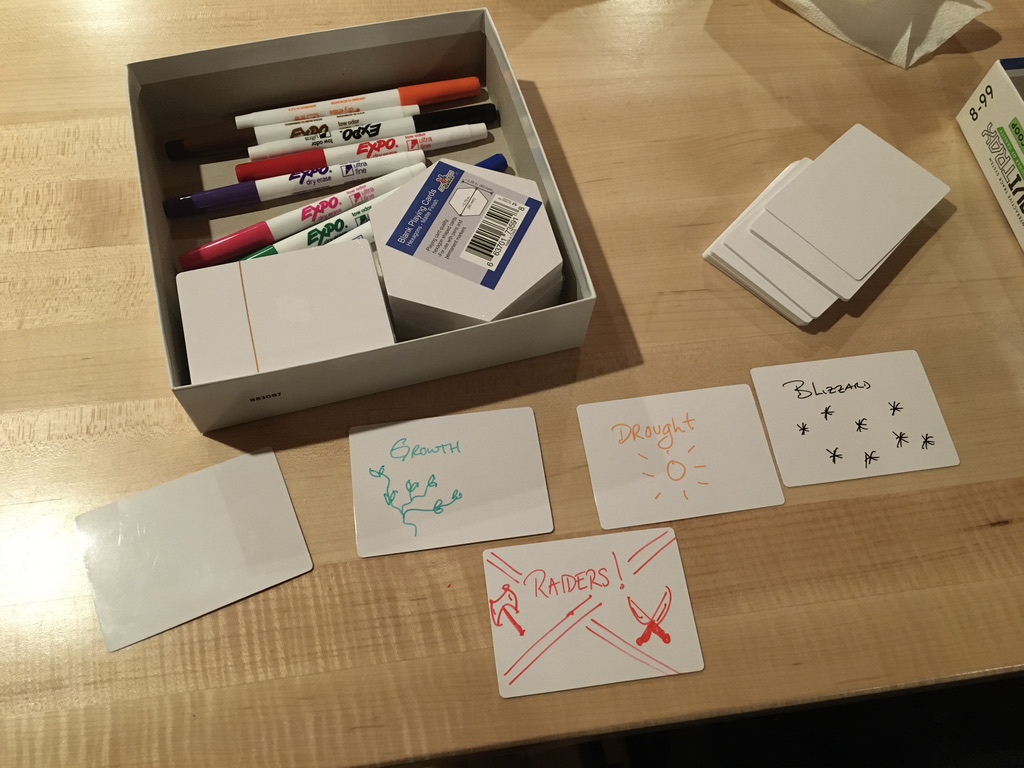
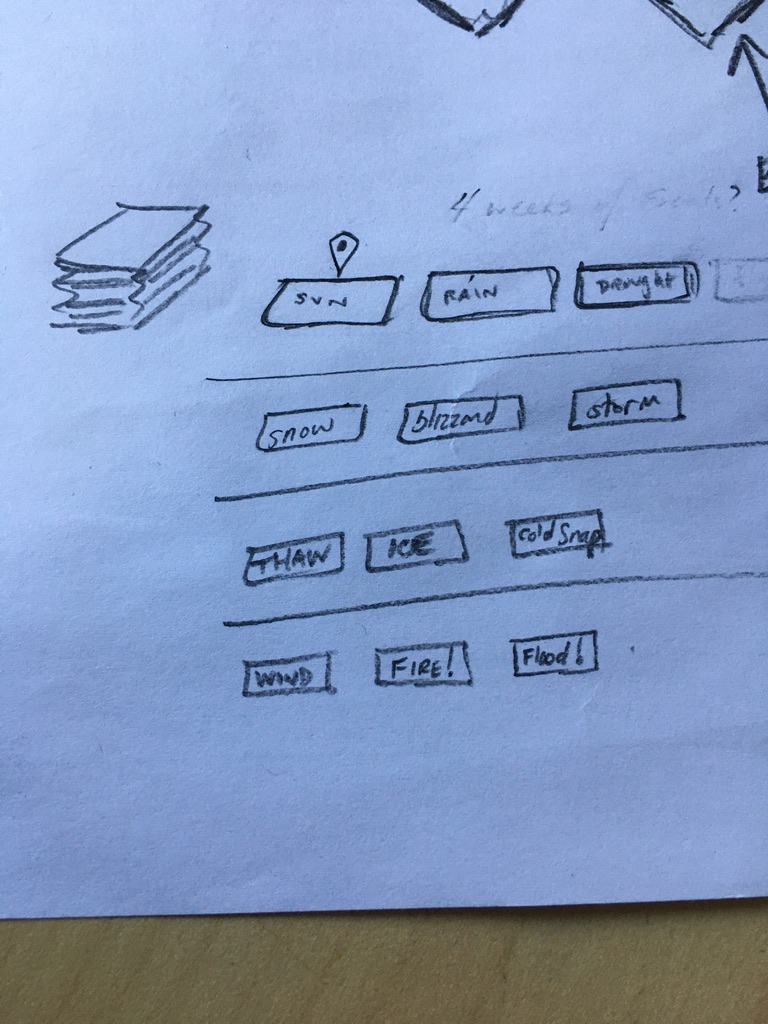
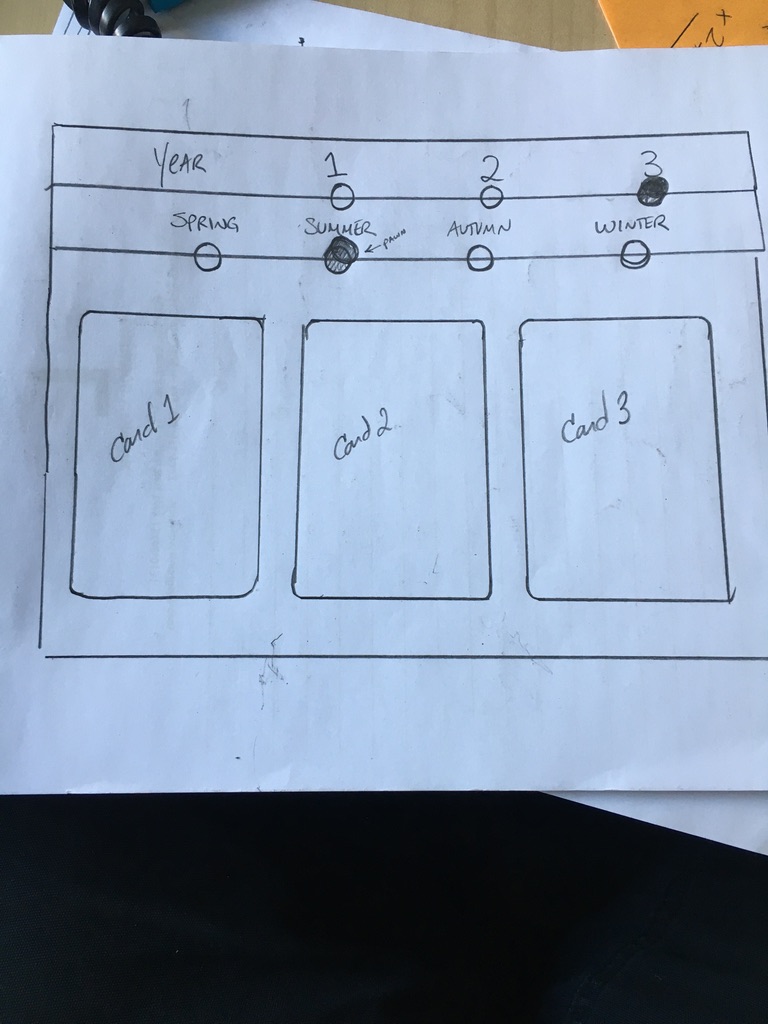

Initial sources of inspiration
- Archipelago’s exploration and gorgeous tile placement / map building
- Carcassonne’s road network building
- Glen More’s pastoral / industrial chain reaction
- Robinson Crusoe’s storytelling
- Everdell’s village-building / prepping for winter / sense of place
The general shape of the game (at that time)
- cooperative
- economic
- resource-converting
- chain-reacting
- village-builder
- changing weather, changing seasons
- We are settlers in an unexplored wilderness attempting to establish a thriving settlement while confronting an unknown threat.
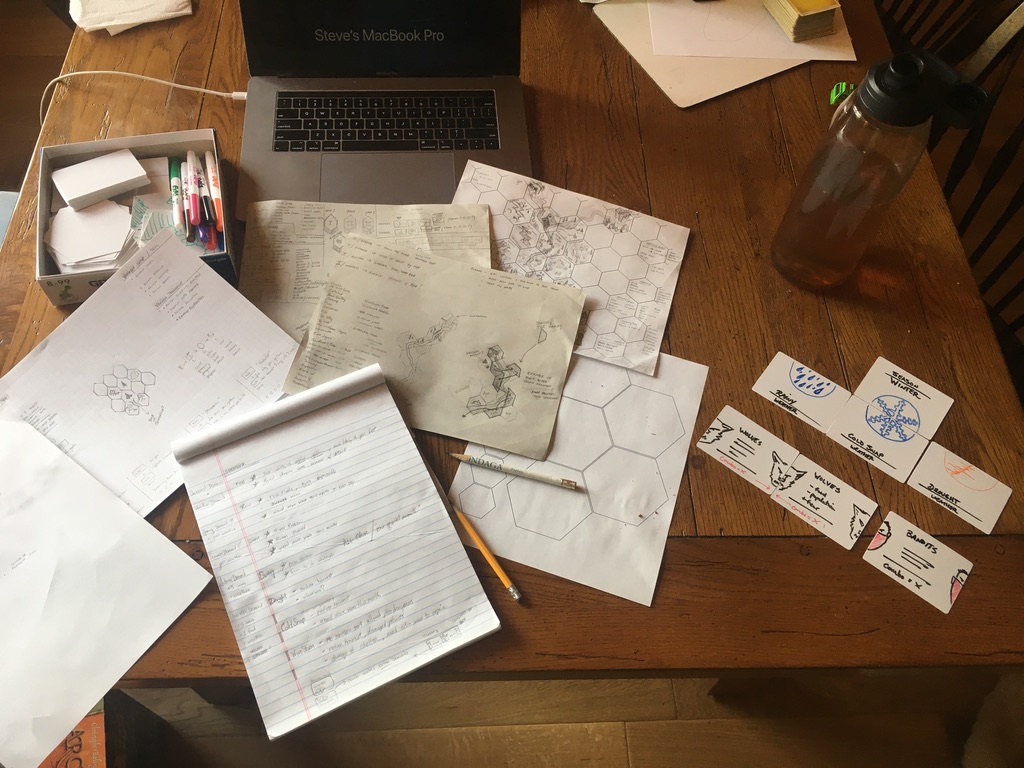
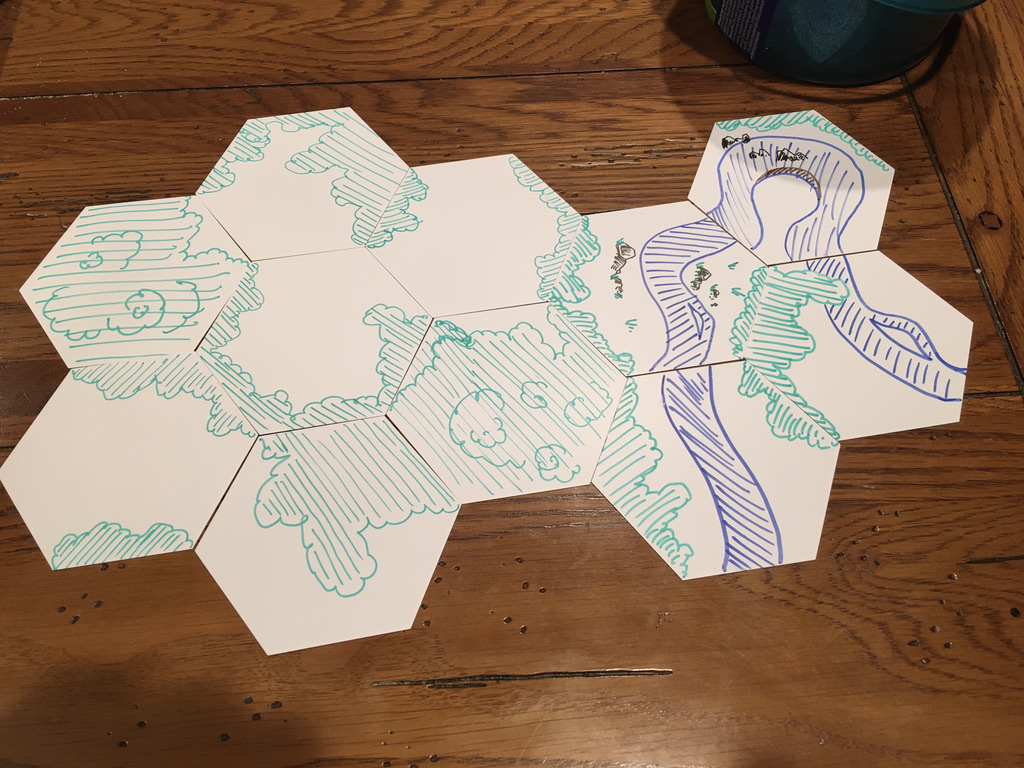

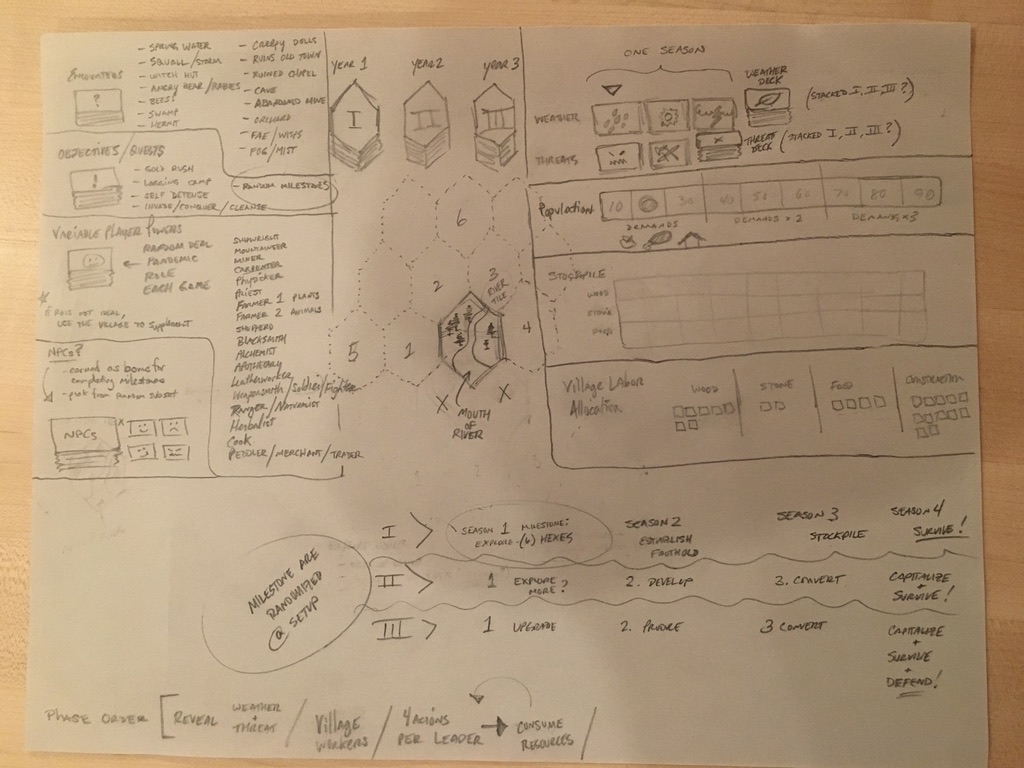
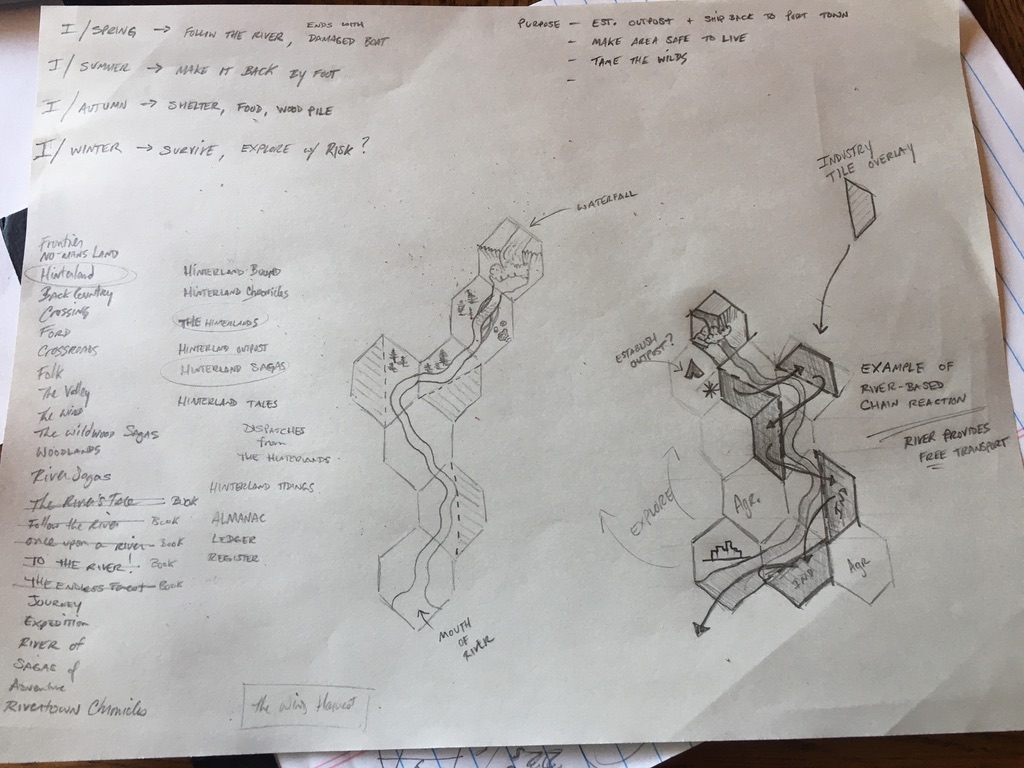
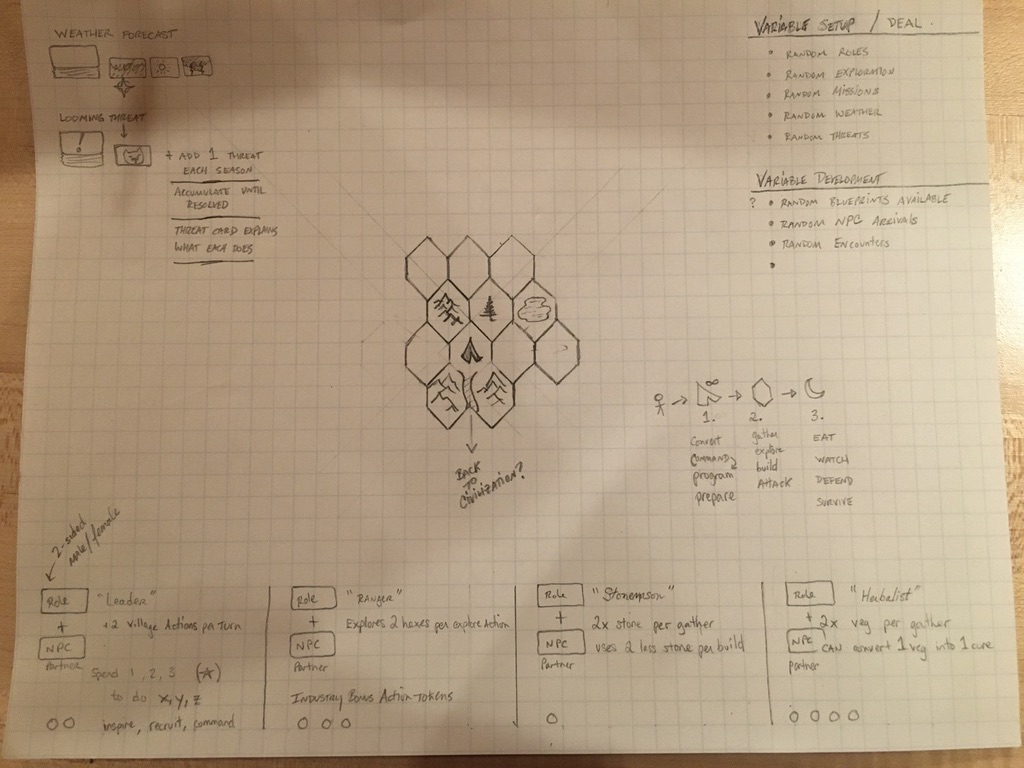
One and a half years later…

5 more months…

3 more months…
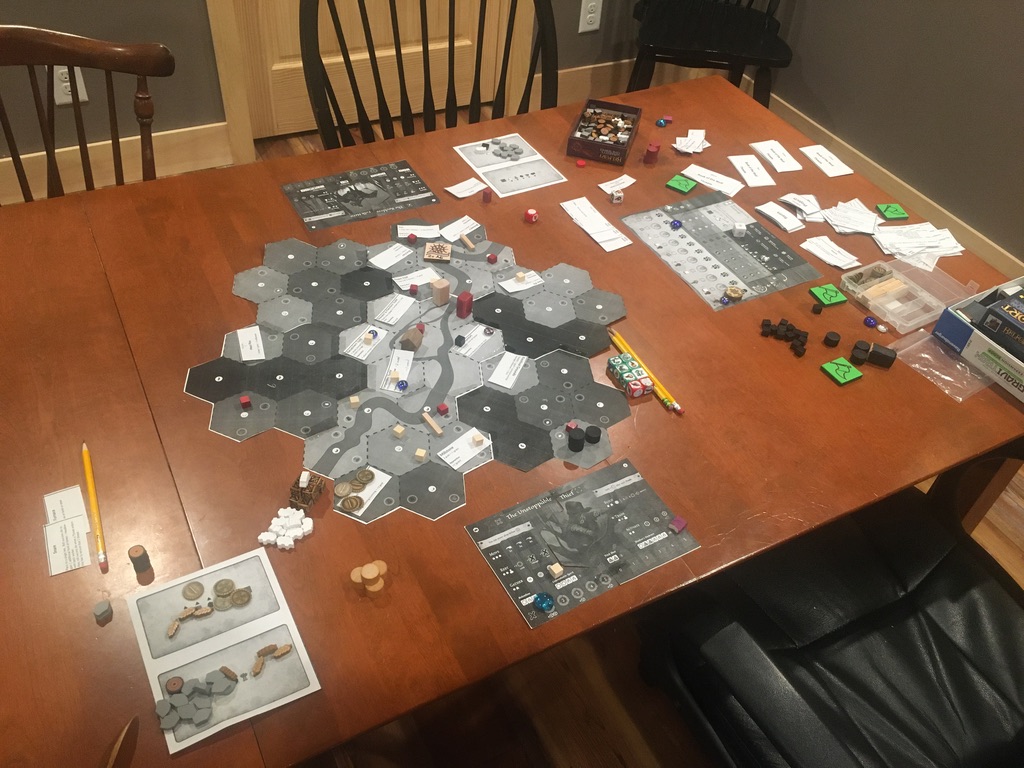

(Placeholder concept art just for fun and motivation)

(Placeholder concept art just for fun and motivation)
COVID-19 Quarantine.. let’s learn Tabletop Simulator and Tabletopia!
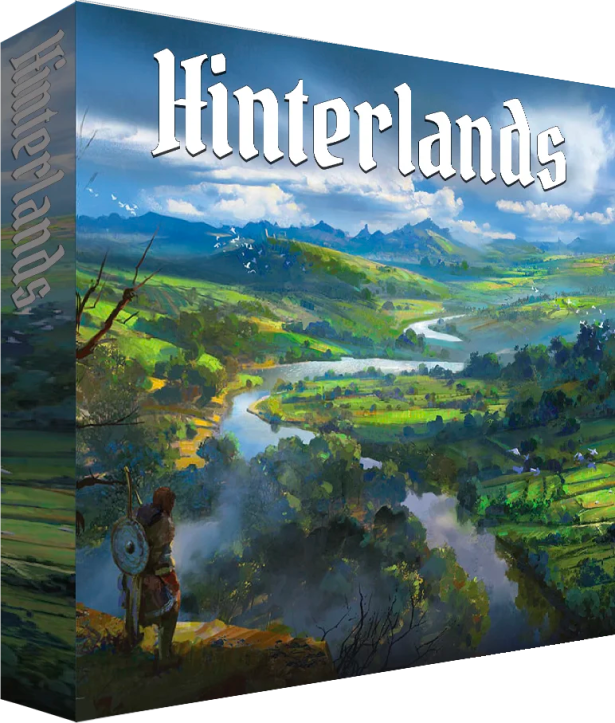
(Placeholder concept art just for fun and motivation)


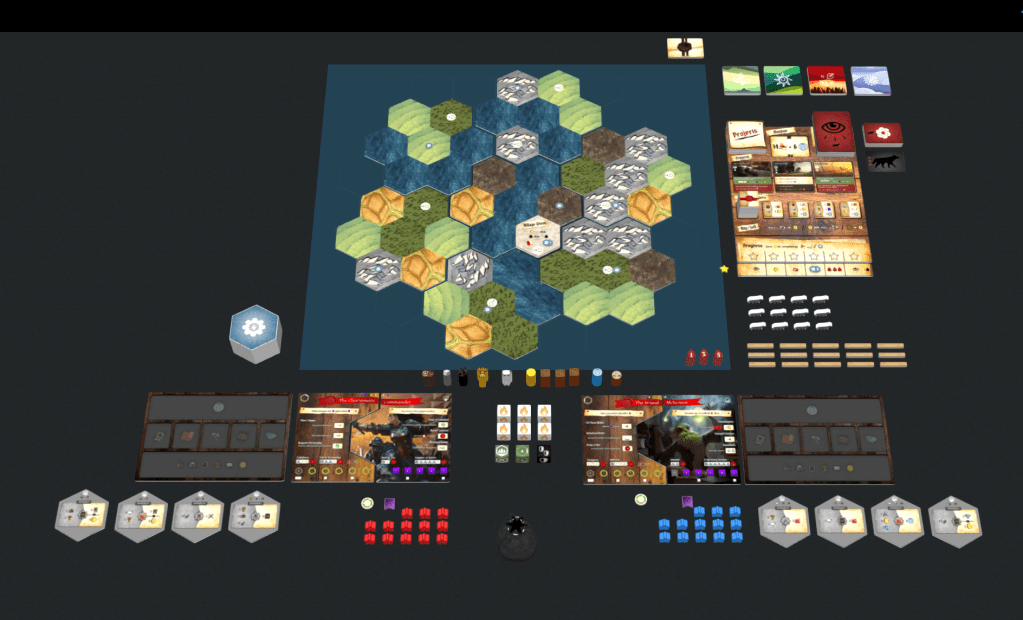
Game Summary at the time…
You are a mixed bag, but you’ll have to do!

I’m sending you to a remote wilderness to lead in the establishment of a thriving settlement.  It is imperative that we have a strong presence in the region to solidify our hold on the Northern Territory.

With hard work, perseverance, and a bit of luck, the village will strengthen with each passing season, but so will the demands of the people and the threats from the hinterlands.

You have one year to prove yourselves.  Succeed and I'll consider your debts paid and grant you your own town charter.  Fail? Well… let us pray that you don’t disappoint.

~ Duke Caravane IV

--//--

Hinterlands is a cooperative, Euro-style, village-builder with an unreasonable amount of setup variability ensuring that every game presents a different puzzle with different threats, different missions, a different landscape, and a different combination of player powers.

Work together, plan your turns wisely, and you just might be heroes after all!
The Key Problem
Since we were developing our vision for what the game should be while we were designing it, we never really had a clear picture in our heads of what success would look like. How would we ever know that we’re done? That we’ve achieved our vision?
Everything was always in flux. If one area of the game broke, we’d invariably adjust too much and then break something else. When we were certain that this play test would be The One™, we walked away defeated as the game fell apart in our laps.
We battled this one for at least six months, not knowing which problem to react to in which way.
Collin suggested we take a break, and he was right. We were grinding and getting nowhere.
We took a breather and switched to the Tile Placement Game.
11 or 12 Tile Placement Design Diaries later..
We’re taking another break, but since the tile placement game is so simple, there isn’t really that much for me to think about on my own.
3 months of ideas…
Left to my own devices, I started mulling over how I’d approach Hinterlands again if I were to start the project over and use everything I’ve learned to help guide the project and keep my decisions on track.
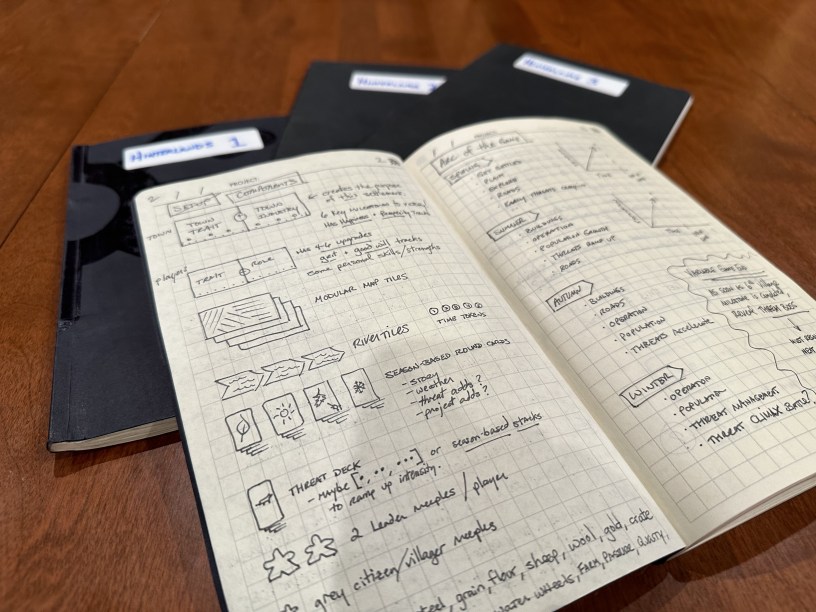
I’ve filled 4 notebooks with new concepts, investigations, problems, solutions, and sketches.
That’s what this series will be about. I hope you’ll come along for the ride.

 Your Turn, Dad